Why Reno's Hard Water Destroys Drains Three Times Faster (And What You Can Do About It)
Reno homeowners face a drainage challenge that coastal residents never encounter: exceptionally hard water that accelerates pipe deterioration and creates stubborn mineral buildup. Understanding how our local water chemistry affects your drains explains why problems develop faster here and what preventive measures actually work in Nevada's unique conditions.
Understanding Reno's Water Hardness Problem
Water hardness measures dissolved minerals—primarily calcium and magnesium—in your water supply. These minerals occur naturally as water flows through limestone, chalk, and gypsum deposits before reaching municipal systems or wells.
Reno's water hardness consistently measures 180-220 parts per million (PPM), firmly in the "very hard" category. For context:
- 0-60 PPM: Soft water
- 61-120 PPM: Moderately hard
- 121-180 PPM: Hard water
- 180+ PPM: Very hard water
Reno sits at the high end of "very hard," with some areas exceeding 220 PPM depending on specific water sources. Compare this to coastal cities like San Francisco (20-40 PPM) or Seattle (30-50 PPM), and you understand why drain problems develop three times faster here—we're literally dealing with 4-5 times more mineral content constantly flowing through our pipes.
How Hard Water Damages Drains Over Time
The minerals dissolved in hard water don't stay dissolved forever. As water moves through your pipes, these minerals gradually precipitate out of solution and deposit on interior pipe surfaces—a process called scaling. Think of it like plaque building up in arteries, except it's calcium and magnesium coating your drain pipes.
The scaling process happens in stages:
Stage 1: Initial deposits (Years 1-5)Minerals begin adhering to pipe walls, particularly in areas where water moves slowly or sits stationary (low spots, horizontal runs with minimal slope). The deposits are thin and don't significantly restrict flow yet, so you won't notice any problems.
Stage 2: Visible narrowing (Years 5-15)Scale buildup becomes substantial enough to narrow your pipe's effective diameter. You might notice slightly slower drainage, though it's subtle enough to dismiss as normal aging. The narrowed pipes also create surface irregularities that catch debris more easily—hair, soap scum, grease—accelerating clog formation.
Stage 3: Significant restriction (Years 15-25)Scale deposits have reduced pipe diameter by 30-50% in heavily affected sections. Drainage noticeably slows. Clogs occur more frequently because the reduced opening provides less margin for debris passage. In severe cases, scale deposits flake off in chunks, creating sudden complete blockages.
Stage 4: Critical failure (Years 25+)In extreme cases, scale buildup can reduce pipes to 20-30% of original diameter or even cause complete closure. Additionally, the weight and pressure of thick scale deposits can stress pipe joints and connections, leading to cracks, leaks, or separations.
The timeline above assumes average conditions. In Reno's very hard water, this process accelerates significantly—reaching Stage 3 restriction in 8-12 years instead of 15-25.
Why Traditional Drain Cleaning Doesn't Solve Scale Problems
Here's where Reno homeowners often waste money and frustration: standard drain snaking does almost nothing to remove mineral scale deposits.
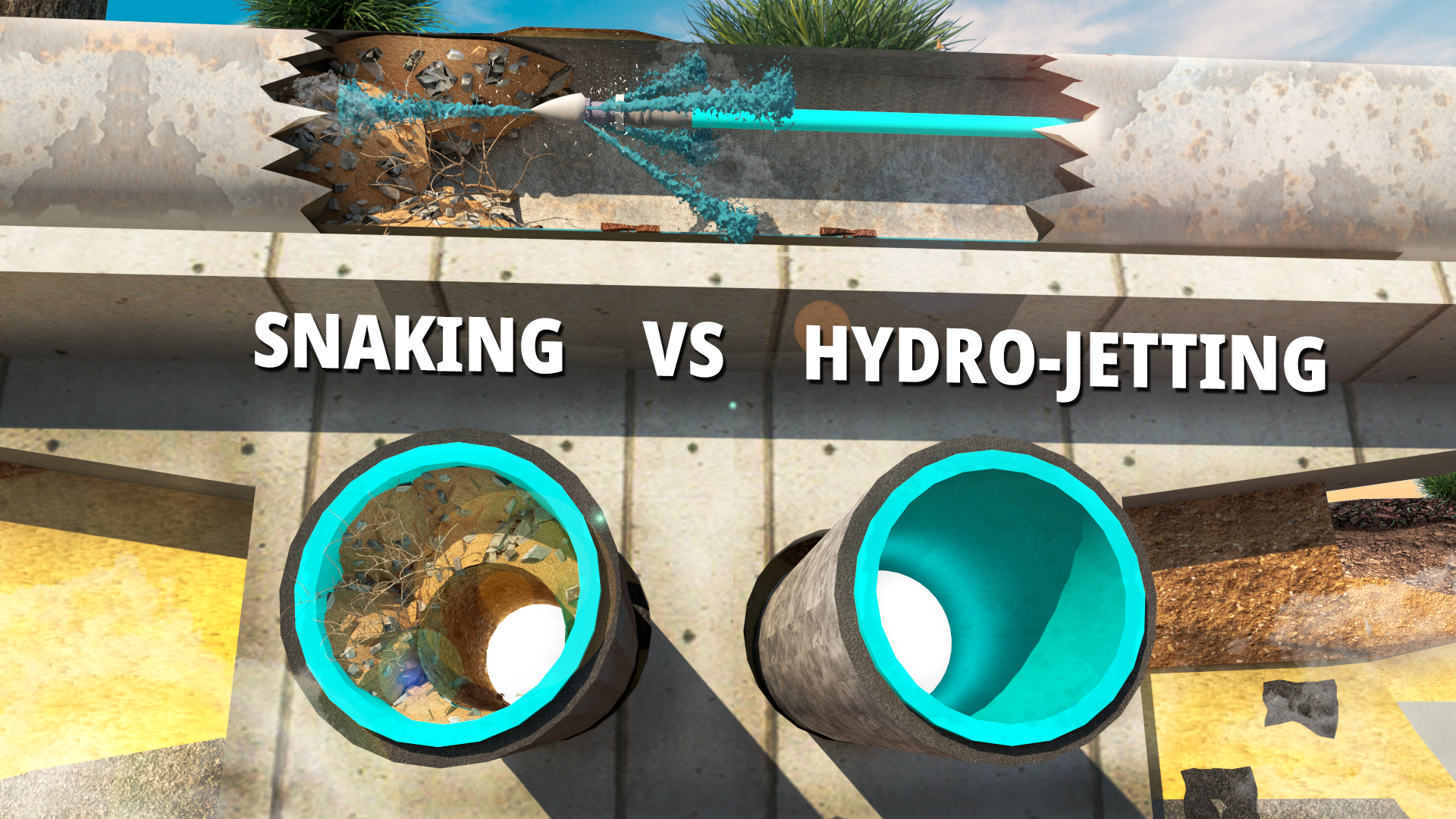
Remember, drain snakes work by mechanically boring through soft blockages—hair, grease, organic material, roots. These materials respond to cutting blades and corkscrewing action. Mineral scale, by contrast, is hard, crystalline deposits bonded to pipe surfaces. A snake's cable simply glides past it, unable to break the mineral-metal bond.
Even if snaking breaks off some loose scale chunks, it leaves the majority of buildup intact. You might gain temporary flow improvement as large scale pieces flush away, but the underlying coating remains and continues narrowing your pipes.
This explains the frustrating cycle many Reno homeowners experience: call for drain cleaning, pipes drain better for 2-3 weeks, then slow down again. You're not dealing with recurring clogs—you're dealing with scale-narrowed pipes that clean poorly with standard methods.
The Only Effective Solution: Hydro Flushing
For mineral scale removal in Reno's hard water conditions, hydro flushing (also called hydro jetting) is the only truly effective cleaning method.
Hydro flushing uses water pressurized to thousands of PSI sprayed through specialized nozzles. This intense water pressure accomplishes what mechanical snaking cannot—it actually scours scale deposits off pipe surfaces, breaking the mineral bonds and flushing everything downstream.
Why hydro flushing works on scale:
The extreme water pressure creates shearing forces that overcome the adhesion between scale deposits and pipe walls. Rotating nozzles systematically cover the entire interior circumference, removing scale uniformly rather than just creating a narrow channel.
Unlike snaking which may take 20 minutes, thorough hydro flushing requires time—sometimes hours for heavily scaled systems—because the technician must systematically work through your entire drain network, dwelling longer on sections with heavy deposits.
Results you can expect:
Properly executed hydro flushing removes scale deposits back to pipe surfaces, restoring close to original diameter. In pipes that had lost 40-50% of diameter to scaling, you'll experience dramatically improved flow—like the difference between drinking through a coffee stirrer vs. a normal straw.
How long results last depends on your water hardness and usage patterns. In Reno's very hard water, expect 3-5 years between needed hydro flushing services for homes without water softeners. Properties with softeners may stretch this to 5-8 years.
Water Softeners: Prevention vs. Cure
Water softeners address the root cause—hard water—rather than treating symptoms. They work through ion exchange, replacing calcium and magnesium ions with sodium or potassium ions, effectively converting hard water to soft water.
What softeners accomplish:
Whole-home water softeners prevent new scale formation throughout your plumbing system—hot water heaters, fixture supply lines, and drain lines that carry softened water (though note that most drain water comes from fixtures using the softened water supply).
Existing scale buildup in pipes isn't removed by installing a softener—softeners prevent future deposits but don't reverse past damage. If your pipes already have significant scale accumulation, you'll need hydro flushing first, then a softener prevents recurrence.
The realistic cost-benefit:
Water softeners cost $800-$2,500 installed, plus ongoing salt costs ($50-100 annually). They protect all your plumbing fixtures, extend appliance lifespans, reduce soap and detergent usage, and prevent scale buildup throughout your home.
Compare this to paying $400-500 for hydro flushing every 4-5 years plus the accumulated damage to fixtures, appliances, and pipes that hard water causes over decades. For most Reno homeowners, water softeners pay for themselves within 5-7 years through avoided damage and extended equipment life.
Softener limitations:
Water softeners don't help with drainage that's already carrying hard water—for instance, if you have a softener but your outdoor hose connections aren't softened and you use these for washing, that water introduces minerals.
Additionally, some homeowners prefer not to soften their drinking water due to increased sodium content. If you bypass kitchen drinking water from softening, scale can still develop in that drain line.
Specific Recommendations for Reno Homeowners
Your strategy depends on your current situation:
New or recent home (pipes less than 10 years old):
Install a water softener now to prevent scale development. Your pipes are still relatively clean—keep them that way. The investment prevents future problems rather than reacting to existing damage.
Mid-age home (pipes 10-20 years old):
Schedule hydro flushing to remove accumulated scale, then install a water softener to prevent recurrence. This one-two approach resets your plumbing to near-new condition and protects it going forward.
Older home (pipes 20+ years old):
Your pipes likely have significant scale accumulation. Hydro flushing provides temporary improvement, but if pipes are 30-40+ years old, they're approaching end of useful life anyway. Consider whether periodic hydro flushing makes sense vs. planning for eventual pipe replacement or lining.
If you do hydro flush older pipes, follow with water softener installation. Even in aging systems, preventing additional scale extends remaining life.
For properties with cast iron pipes:
Scale deposits accelerate corrosion in cast iron by trapping moisture against metal surfaces. This creates a double-aging effect—both corrosion and mineral accumulation. If you have cast iron pipes and haven't addressed hard water, assume you'll need attention sooner than PVC or copper systems.
Maintenance Schedules That Work in Nevada
Unlike areas with soft water where drain problems develop from use patterns (grease, hair, etc.), Reno's hard water adds a time component—scale accumulates whether you're careful or careless.
Without water softener:
- Camera inspection every 5-7 years to monitor scale accumulation
- Hydro flushing when camera shows 30%+ diameter reduction
- Expect 4-6 year intervals between hydro flushing services
- Address developing scale before it reaches critical restriction
With water softener:
- Dramatically extended intervals—possibly 8-12 years between needed services
- Primary maintenance becomes addressing use-related issues (grease, hair) rather than scale
- Periodic inspections still valuable to catch any problems early
Signs Your Pipes Have Scale Problems
Certain symptoms specifically indicate mineral scale rather than other blockage types:
All drains gradually slowing over months/years: Scale accumulation is gradual system-wide, unlike sudden clogs from specific blockages.
White or gray crusty deposits visible on fixtures: What you see on faucets and showerheads is also happening inside your drain pipes.
Reduced water pressure alongside slow drains: Scale affects both supply and drain lines, so experiencing both symptoms simultaneously points to mineral problems.
Clogs that return within 2-3 weeks after snaking: Standard cleaning doesn't remove scale, so if clogs recur very quickly after service, narrow pipes from scale are the underlying issue.
The California Transplant Factor
Many Reno homeowners relocated from California, particularly Bay Area or Southern California. If you moved from areas with relatively soft water, your previous home maintenance habits won't work here.
You might have gone 15-20 years in California without any drain problems beyond occasional hair clogs. Moving to Reno with the expectation of similar trouble-free experience sets you up for surprise when problems develop much faster.
What was 20 years of trouble-free drainage in San Jose becomes 6-7 years in Reno before scale issues emerge. It's not that you're doing anything wrong—it's that water chemistry here creates challenges you didn't face before.
Making Informed Decisions
Understanding Reno's hard water impact on your drains helps you:
Avoid wasting money on ineffective solutions: Repeatedly snaking drains with scale problems wastes money on services that can't solve the underlying issue.
Invest in prevention rather than reaction: Water softeners cost less over time than repeatedly addressing scale damage.
Set realistic expectations: Your drains need more attention here than in soft water regions—that's not a reflection of poor quality plumbing or bad luck, it's local water chemistry.
Plan appropriately for home age: If you bought a 1980s home in Reno with original pipes and no water softener, plan for drain issues within 5-10 years even with careful use.
Reno's hard water is a reality we live with—but understanding its effects on your drains empowers you to protect your plumbing investment effectively.
.png)